WMS Selection
Assigning storage locations using warehouse rules
Design putaway rules around eligible locations, capacity, stock condition and a visible overflow decision.

Archive
WMS Selection
Design putaway rules around eligible locations, capacity, stock condition and a visible overflow decision.
WMS Selection
Identify the order, stock, work and configuration records needed for a consistent warehouse restore, then verify recovered data.
Order Management
Batch picking groups multiple orders into one route; single-order picking keeps each order separate from the start.
Warehouse Reporting
Turn warehouse exceptions into an owned queue with source records, deadlines, next actions and closure checks.
Warehouse Reporting
Check the item, unit, location, stock and work fields that will direct a proposed warehouse automation flow.
Order Management
Check order stages, open quantities, stock definitions and channel updates before relying on a 3PL’s visibility claims.
WMS Selection
Check when a proposed WMS captures batch and serial IDs, how it enforces an order requirement and whether records trace from receipt to shipment.
WMS Selection
Select a bounded warehouse automation pilot using a measurable problem, dependable inputs, observable outcomes and safe recovery.
Scanning Systems
Choose barcode label material, adhesive and print method for actual warehouse surfaces and exposure, then check the printed result.
Packing and Dispatch
Cartonisation rules suggest packaging from item dimensions, fragility and allowed combinations.
WMS Selection
Build a representative order set, compare relevant software starting points and record what each demonstration proves or leaves unresolved.
Order Management
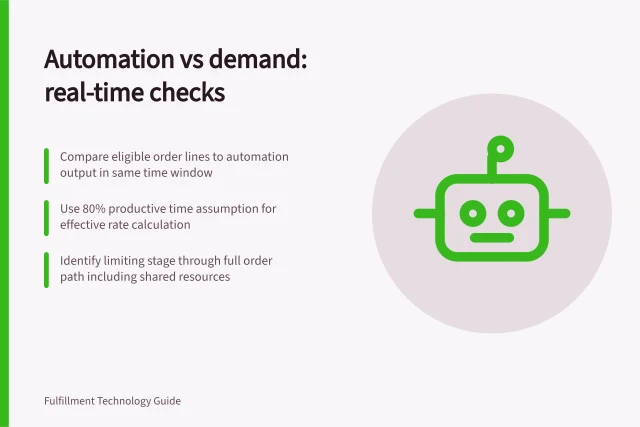
Match proposed automation output to actual warehouse demand using the same unit, busy interval and complete work path.
Carrier Integrations
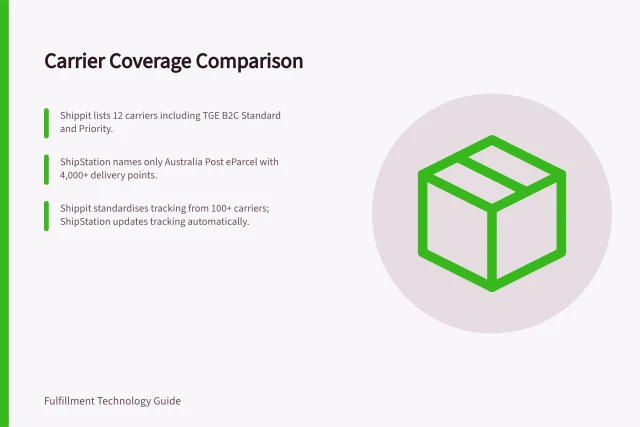
Compare Australian shipping platforms by carrier service, account route, labels, tracking and documented limitations.
Scanning Systems
Compare handheld and camera-app scanning by task flow, barcode support, data entry, device handling and transaction recovery.
Carrier Integrations
Compare eStore Logistics and ShipBob on documented integration routes, change limits, recovery and account questions.
Warehouse Reporting
Define separate dispatch and delivery commitments, calculate rates and keep missing parcel outcomes visible.
WMS Selection
Run the same orders through WMS pick and pack demos, checking confirmations, short picks, pack corrections and the records left behind.
Order Management
Map store order lines to warehouse instructions, confirm acceptance and prevent duplicate work when an import must be retried.
Order Management
Use staff tasks to assess a 3PL portal’s search, permissions, order states, exceptions and exports.
Warehouse Reporting
Plan the order, stock, shipment and return exports needed to reconcile an exit from a 3PL.
Order Management
Plan fulfilment integrations around accepted warehouse work, safe order changes, accurate dispatch updates and visible failure recovery.
Warehouse Reporting
Build a fulfilment scorecard that separates order speed, dispatch, delivery, errors and unresolved exceptions.
Order Management
Map the order path, identify the capability each hand-off needs, and compare fulfilment tools using representative orders and exceptions.
WMS Selection
Plan fulfilment technology implementation from data and configuration through complete-order testing, warehouse cutover and early support.
Warehouse Reporting
Plan how orders, stock and parcels stay controlled during technology failures, and reconcile records before warehouse work resumes.
Packing and Dispatch
Triage missing data, rejected services, printing failures and uncertain label outcomes while keeping the parcel tied to the correct booking.
Order Management
Handle late order edits by checking live warehouse work, confirming a stop or revision and reconciling the final parcel and order.
Order Management
Keep quantities, fulfilment parts and customer updates coherent when one order is shipped or collected in several parts.
Warehouse Reporting
Trace a receiving quantity difference across the order, delivery, physical count and system records before correcting it.
Warehouse Reporting
Find patterns in repeated warehouse stock adjustments, trace the underlying work and check whether a process fix holds.
Order Management
Define status ownership, map supported channel states and reconcile late, duplicate or missing order updates.
Order Management
Map owners, records and exceptions from order acceptance to carrier handover, then turn observed gaps into software requirements.
Warehouse Reporting
Match a delivery to purchase order lines using item identity, units and a physical count, while keeping discrepancies visible.
Warehouse Reporting
Define order cycle timestamps, calculate stage intervals and account for split, incomplete and held orders.
Warehouse Reporting
“Picks per hour” is tempting because it is easy to chart.
Order Management
Find where an order import failed, inspect the rejection, retry safely and reconcile the accepted warehouse work.
Order Management
Assess who owns order release, allocation, exceptions and outstanding quantities across sales channels and fulfilment systems.
Packing and Dispatch
A packing and dispatch system should confirm the right order, protect the item, record an accurate parcel and produce one valid label.
Order Management
Picking technology should solve a defined warehouse problem: excessive travel, wrong items, slow confirmation or poor visibility of exceptions.
Warehouse Reporting
Plan the stop point, in-flight orders, opening stock, reconciliation, fallback and go or no-go decision for a warehouse software cutover.
Packing and Dispatch
Plan how to stop automated picking, account for work in progress, release manual picks and reconcile before restarting.
WMS Selection
Check product identifiers, units, barcodes, warehouse locations and proposed opening-stock records before a fulfilment system launch.
Warehouse Reporting
Set stop rules, controlled manual work and reconciliation steps before a warehouse network outage disrupts WMS tasks.
Packing and Dispatch
A second piece of paper is not always a second shipment charge.
Order Management
Follow goods from arrival to confirmed storage, with clear records for quantity, condition, putaway work and exceptions.
Warehouse Reporting
Compare a warehouse count with the right system balance, account for intervening movements and approve a supported correction.
Warehouse Reporting
Keep original carrier events, map parcel statuses carefully and investigate missing or conflicting tracking updates.
Warehouse Reporting
Record damaged units by delivery and quantity, hold them in the warehouse and keep the later inspection decision traceable.
Packing and Dispatch
Reducing wrong-item picks with verification steps: practical criteria and a clear evaluation process for marketing teams.
Warehouse Reporting
Define completed orders and verified defects, then report affected orders and error incidents with clear denominators.
Order Management
Match contractor accounts to current warehouse tasks, check remote and privileged access, and verify removal when work ends.
Order Management
Set warehouse eligibility and routing preferences, decide when to split, and check what happens when available stock changes.
Warehouse Reporting
Plan cycle-count scope, frequency and workload in a WMS while accounting for live movements and pending reviews.
Order Management
Design service-selection rules around parcel eligibility, delivery promises, rule priority and clear holds for missing data.
Carrier Integrations
Assess carrier services, booking rules, label recovery and tracking when choosing shipping software for an Australian fulfilment operation.
Carrier Integrations
Return the right dispatched lines, quantities and tracking details to a storefront without closing unfinished parts or duplicating notifications.
Order Management
Trace a test order through the selling channel, warehouse, parcel and returned status, including a controlled exception and a clear pass decision.
WMS Selection
Use the same exact, short, excess and damaged deliveries in each WMS demo, then inspect receipt, exception and putaway records.
WMS Selection
Run a controlled WMS recovery exercise that reconciles restored records with orders, stock and physical warehouse work.
Scanning Systems
Design a warehouse scan trial that separates unreadable labels, wrong targets, incorrect acceptance and missing transactions.
WMS Selection
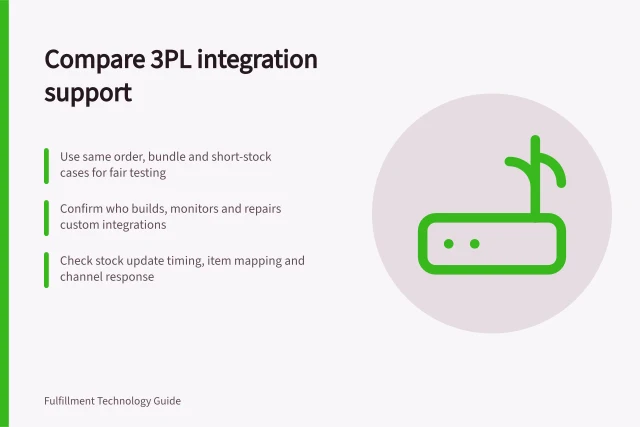
Assess a 3PL’s portal, stock visibility, connections, exception handling and exit records using representative orders.
Order Management
Record source, destination and hand-off state for warehouse zone moves, including partial moves and reserved-stock exceptions.
Order Management
Verify the physical contents against the released order before purchasing a label.
Warehouse Reporting
Assess a defined warehouse automation flow through process evidence, data accuracy, demand, safety and fault recovery.
Scanning Systems
Plan warehouse identifiers, labels and scanning controls, then check how each scan affects the task and stock record.
Warehouse Reporting
Improve warehouse inventory accuracy by defining the record, controlling movements, counting stock and investigating differences.
WMS Selection
Compare WMS options using the same receiving, putaway, picking, packing and exception cases, with a clear record of configuration and gaps.
WMS Selection
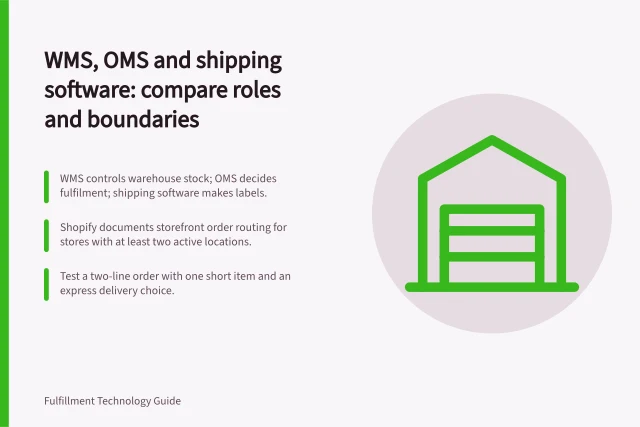
Compare the jobs of an OMS, WMS and shipping platform, then test where order, stock and shipment ownership passes between them.